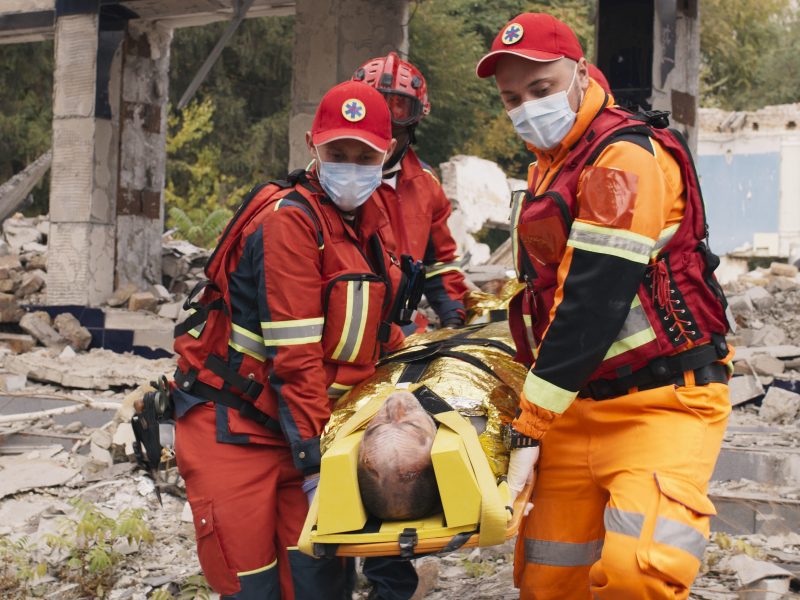
- The consortium working on SAFEPLACE has given a third demonstration of the platform, concentrating on the Luxembourg extension that is focused on flooding and humanitarian use cases.
- The demo by partners Starion, Clarence, HITEC Luxembourg, RSS-Hydro and FACTiven was attended by the European and Luxembourg Space Agencies, and Luxembourg Government agencies and first responders.
- One of a number of civil security projects being developed by CS Group’s space business unit, LUX-SAFEPLACE is funded through the European Space Agency’s (ESA’s) Civil Security from Space Programme with the support of Luxembourg.
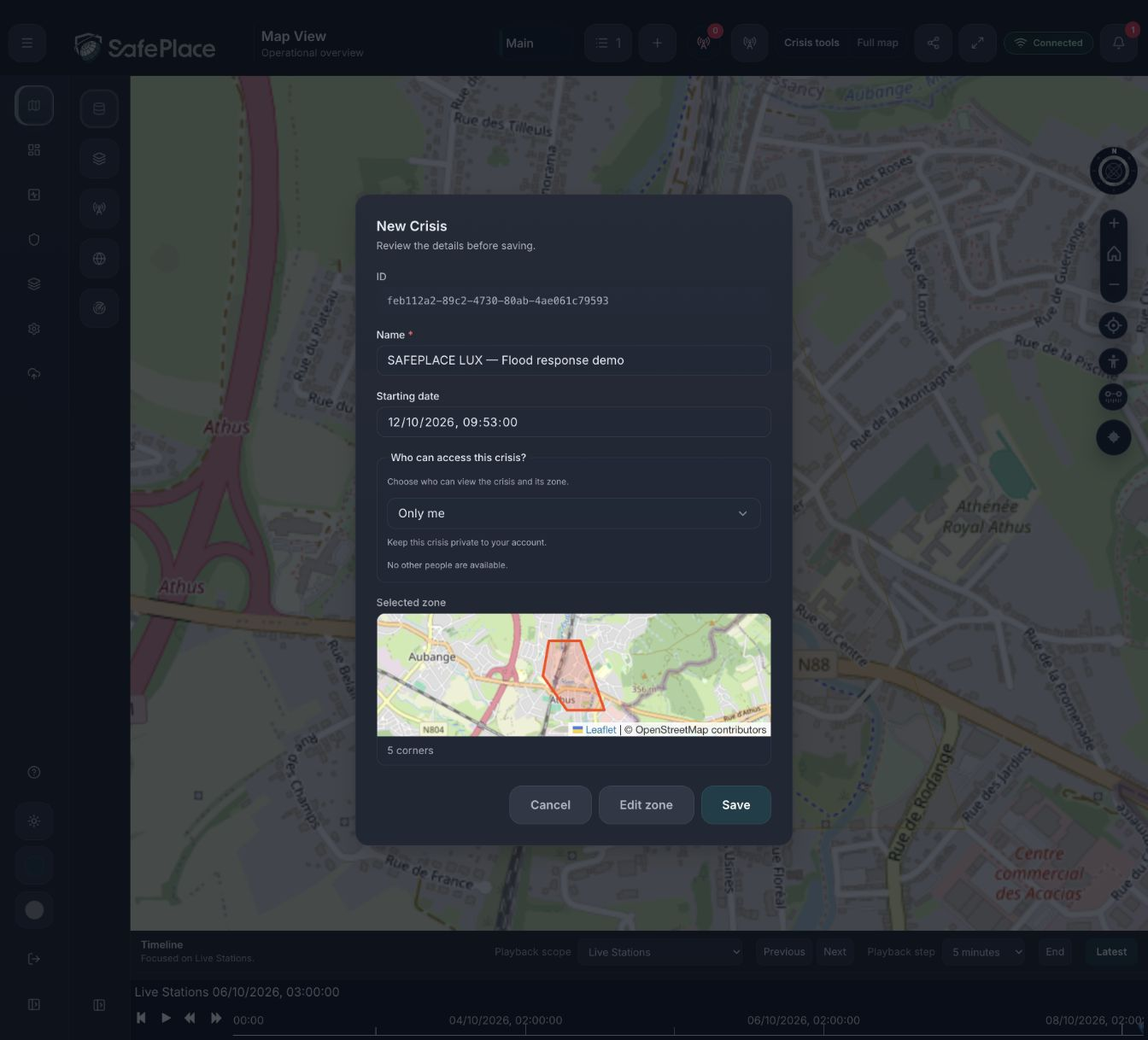
The Luxembourg extension to the SAFEPLACE crisis response prototype platform led by Starion, a CS Group company, was demonstrated to partners and stakeholders on 8 October 2026, following a 9-month project to define the priorities and requirements.
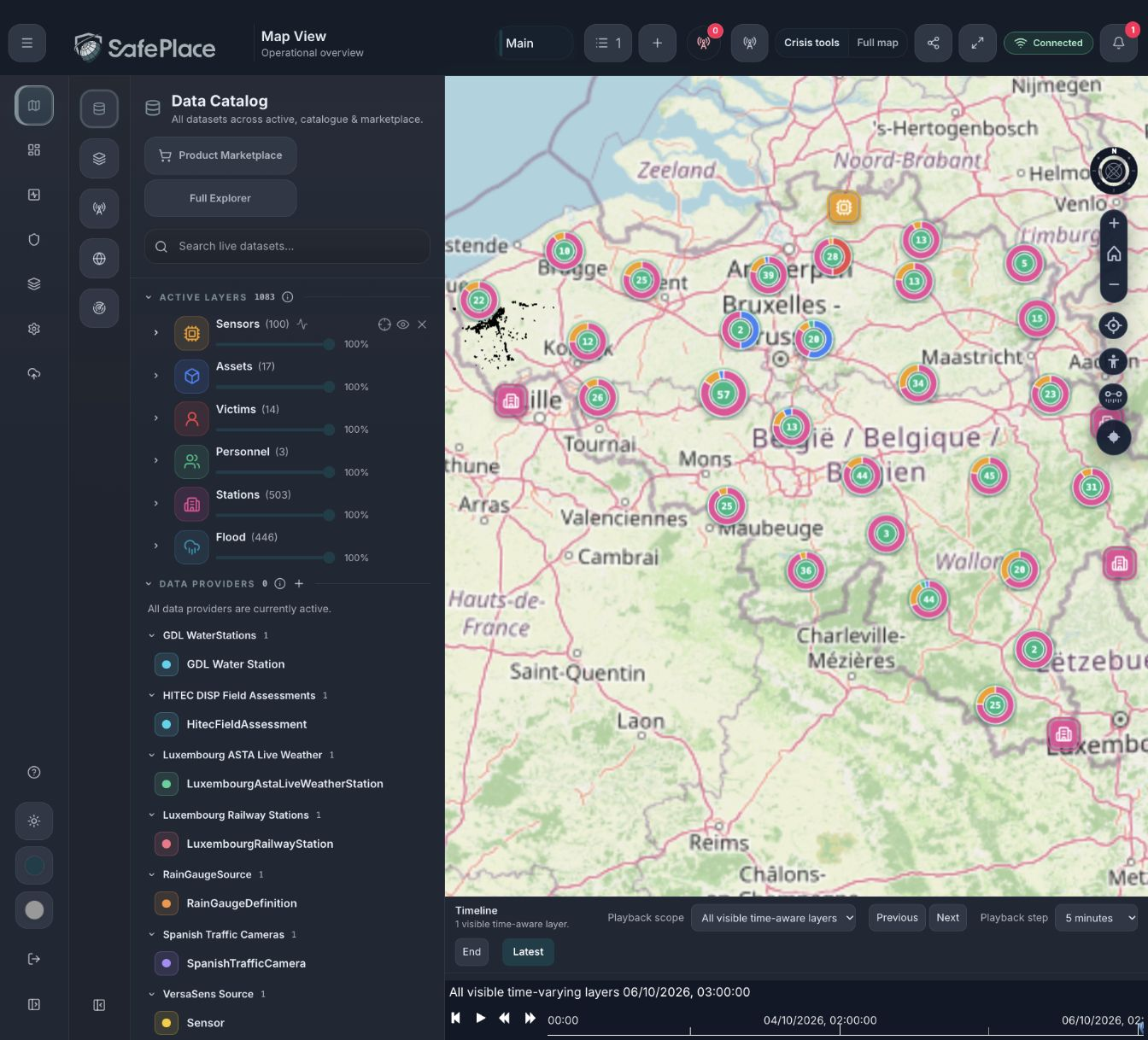
Civil security and situational awareness is a key focus area for CS Group, which has established a portfolio of platforms addressing specific needs by harnessing intelligence from space data, including FloodCARE and CRIMSON. SAFEPLACE is designed to support fast, informed decision-making during complex emergencies such as wildfires, floods, toxic chemical spills and earthquakes. The platform integrates satellite communications with Earth observation (EO), internet of things (IoT), in situ sensors and navigation data to provide near-real-time, actionable information.
The objectives of LUX-SAFEPLACE include strengthening Luxembourg’s ability to respond swiftly and effectively to concurrent crises using integrated national and international data sources while ensuring data security and sovereignty. The aim is to leverage existing assets and infrastructures in combination with advanced technologies such as digital twins, artificial intelligence and real-time data fusion.
Demonstration context and showcase
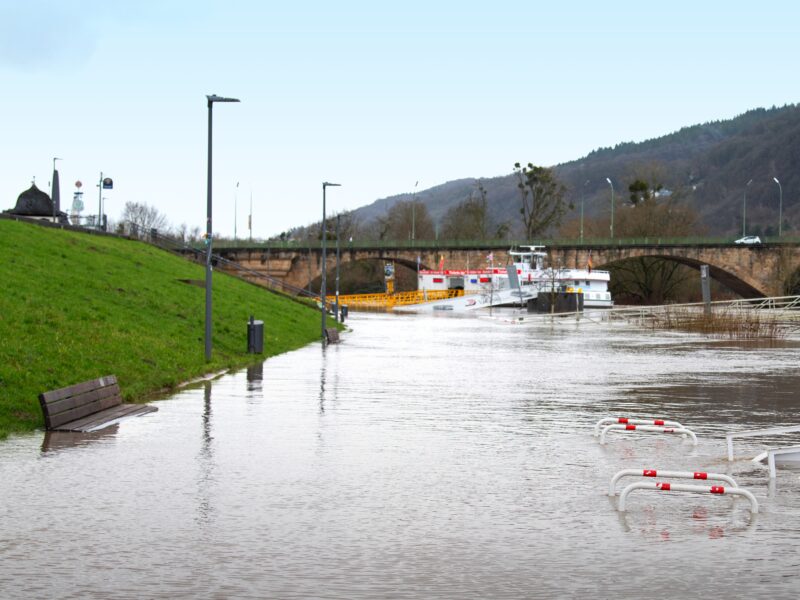
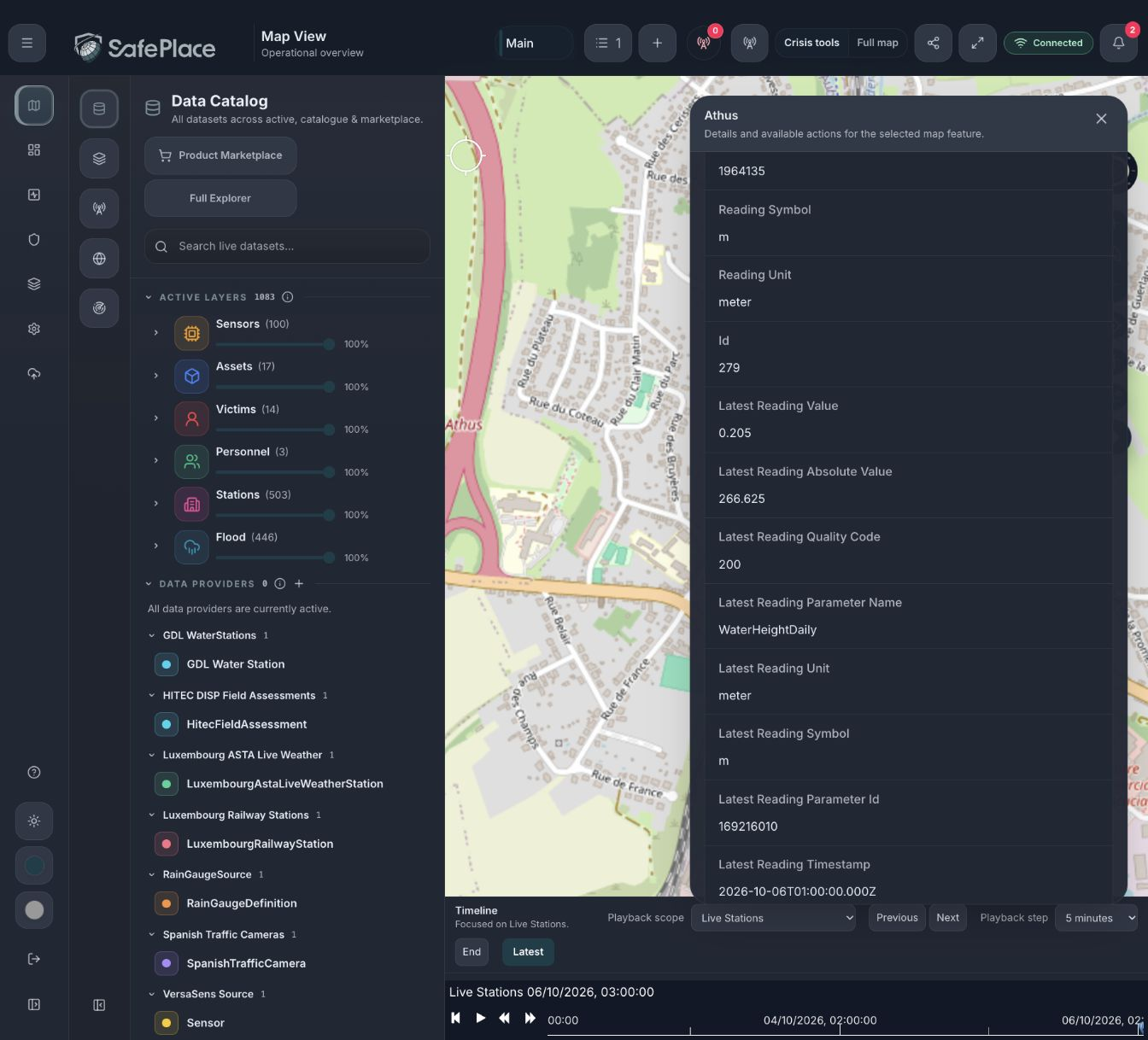
The demonstration opened with footage of the devastating 2021 floods in Echternach, setting the scene for a scenario illustrating how LUX-SAFEPLACE could support flood monitoring and emergency response. In the scenario, a water-level sensor detected that a predefined threshold had been exceeded, triggering an alert and the creation of a crisis within the platform.
The demonstration then showcased the integration of complementary capabilities from the Luxembourg partners. RSS-Hydro’s FloodSENS, an AI-powered solution that uses satellite imagery and topographic data to identify and map flood extent, was used to provide additional information on the affected area. This information was integrated into the SAFEPLACE operational picture.
HITEC Luxembourg’s DISP (Dynamic Information Sharing Platform) provided capabilities for situational awareness, information sharing, alerting and coordination, while NoSaCo was demonstrated as the satellite communications solution to support connectivity in emergency situations. Together, these capabilities illustrated how flood intelligence can be shared with operational stakeholders and how communications resources can be mobilised to support crisis response.
The demonstration also highlighted the role of FACTiven’s Safe Data Path in supporting data traceability across the information exchange process, alongside Clarence’s European sovereign cloud infrastructure, on which the platform was hosted. Finally, the partners demonstrated synchronisation between the regional crisis-response node developed for Luxembourg and the main SAFEPLACE Hub hosted in Belgium, illustrating how information can be exchanged between national and cross-border operational environments.
Together, these capabilities demonstrated the potential of LUX-SAFEPLACE to connect sensor alerts, satellite-derived flood intelligence, crisis coordination, resilient communications and traceable data exchange within a federated crisis-response architecture, supporting more informed and coordinated decision-making during emergencies.
The event also included an overview of the overall scope and timeline of SAFEPLACE, which currently has a hub in Belgium and regional nodes in Spain and Luxembourg. The design enables cross-border crisis information sharing and provides shared tools and services while ensuring local data security.
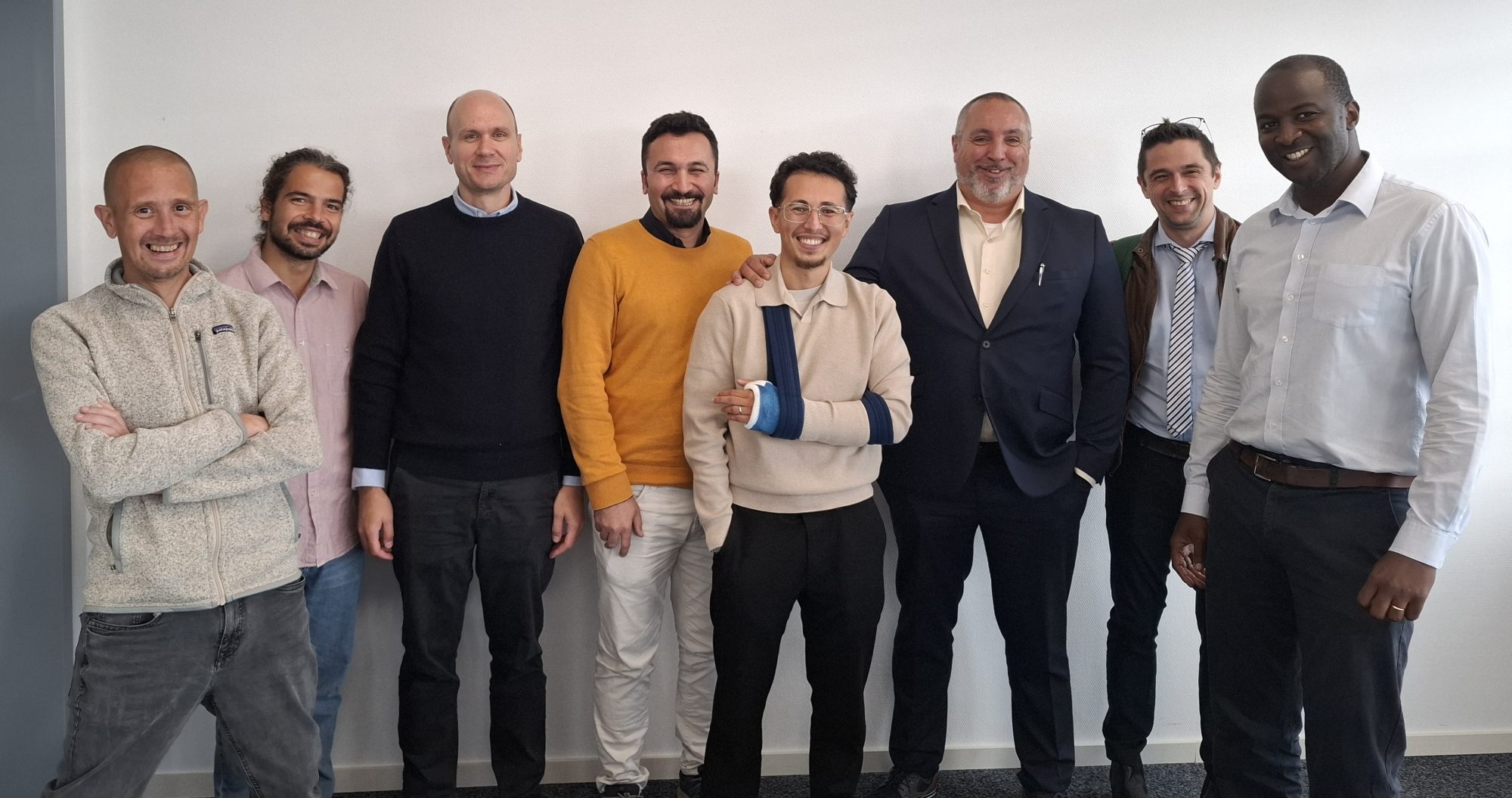
Attendees
In addition to the SAFEPLACE consortium, the attendees included representatives from ESA, the Luxembourg Space Agency, the Government of the Grand Duchy of Luxembourg, the Luxembourg Administration de la Gestion de l’Eau (Water Management Authority) and Corps Grand-Ducal d’Incendie et de Secours (Luxembourg Fire and Rescue Corps).
Yorgos Efstathiou, SAFEPLACE Luxembourg Project Manager, said: “This demonstration marked an important milestone for SAFEPLACE, as we successfully showed how Luxembourg technologies can work together to provide a clearer picture of a developing crisis, highlighting their potential to strengthen crisis response and cross-border cooperation in the future.”
Further demonstrations of the SAFEPLACE platform are planned in Spain next month and in Belgium in 2027.
Find out more
- SAFEPLACE case study
- FloodCARE – flood monitoring and crisis management
- CRIMSON – smart operation management