Case study: SAFEPLACE crisis response platform

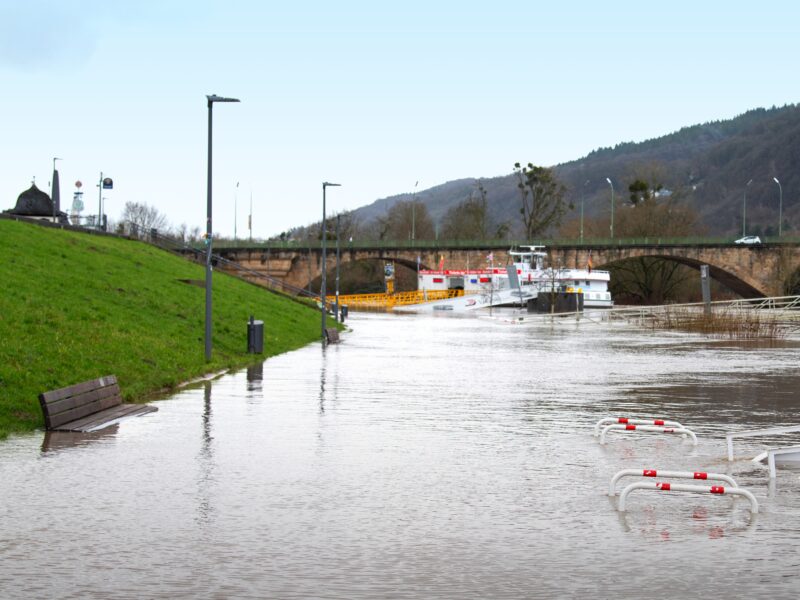
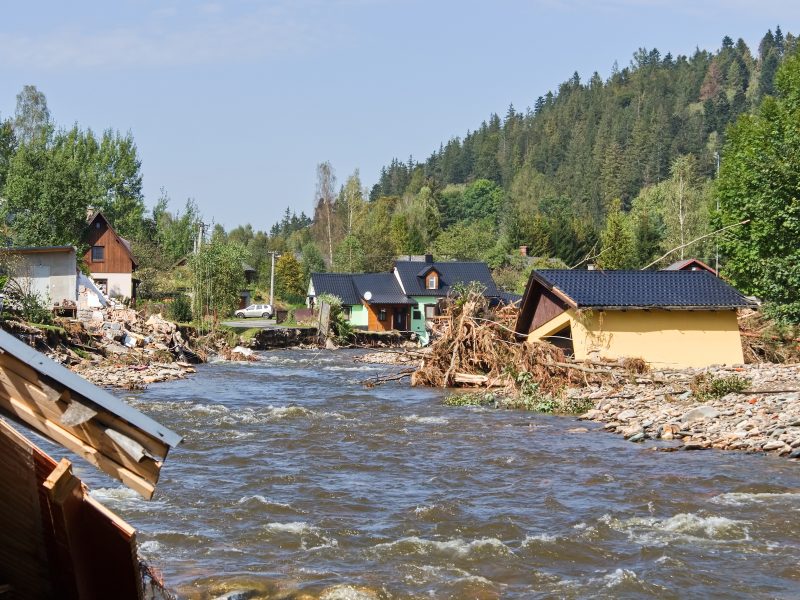
SAFEPLACE is a crisis response platform designed to support fast, informed decision-making in the face of complex emergencies caused by wildfires, floods, toxic chemical spills and earthquakes. Starion has been leading the design and development of SAFEPLACE since 2024, working with partners and stakeholders in Belgium, Spain and Luxembourg.
The platform integrates a wide range of space-based and terrestrial data sources to create a comprehensive situational awareness environment, applying artificial intelligence (AI) and advanced data fusion techniques to translate raw data into actionable insights.
The 3-year Safety Platform for Crisis and Emergency (SAFEPLACE) project is an initiative within the European Space Agency’s (ESA’s) Civil Security from Space (CSS) programme.
Timeline and milestones
- October 2024 – SAFEPLACE platform development starts
- June 2025 – First proof of concept demonstration at ESA’s European Space Security and Education Centre (ESA ESEC) in Redu, Belgium. Focus: flooding, chemical incidents and earthquake use cases
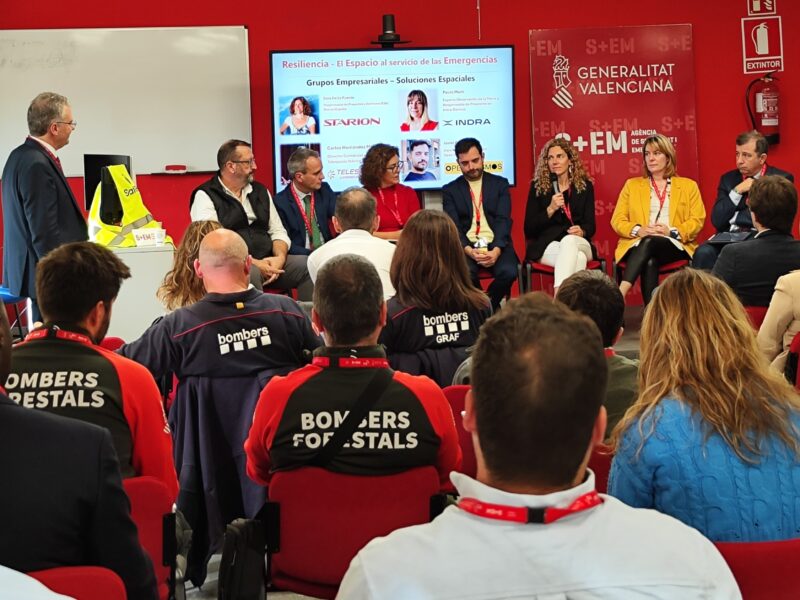
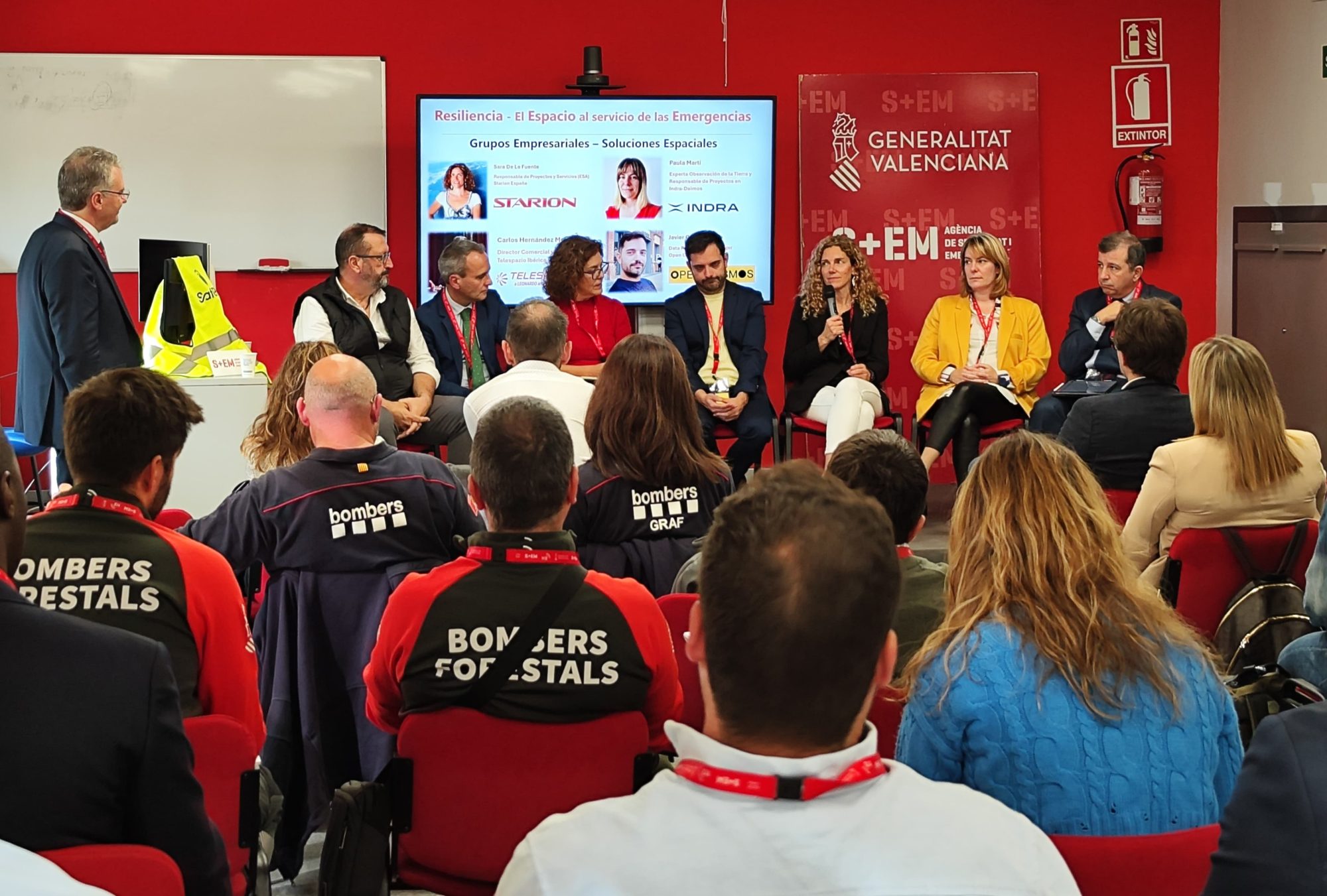
- November 2025 – Second proof of concept demonstration in Valencia, Spain. Focus: wildfire use case and chatbot
- November 2025 – Luxembourg extension starts (LUX-SAFEPLACE). Focus: flooding and humanitarian use cases
- March 2026 – Extensions in Belgium and Spain start. Focus: wildfire and flooding use cases
- October 2026 – Early Luxembourg Demonstration of flooding and humanitarian use case in Foetz, Luxembourg
- November 2026 – Demonstration of wildfire detection with thermal images and flood prediction use cases including additions to the chatbot
- February 2027 – Belgium capability demonstration at ESA ESEC in Redu, Belgium. Focus: flooding, wildfire, chemical incidents and earthquake use cases
- September 2027 – Live demonstration of capabilities at Campus Vesta (training camp for first responders) in Ranst, Belgium, involving crisis management organisations and first responders
Stakeholders
Starion Belgium is leading an international consortium of partners:
- Belgium: Public Safety Communications Europe (PSCE), VersaSense, VITO, neXat, Centre Spatial de Liège (CSL), ST Engineering, Epic Blue, Spacebel, Constellr
- Spain: Starion Spain, Vodafone, AISTECH
- Luxembourg: Starion Luxembourg, Clarence, RSS Hydro, FACTiven, HITEC Luxembourg
Other stakeholders include:
- ESA, Belgian Science Policy Office (BELSPO), Luxembourg Space Agency
- Belgium: Aerospacelab, Campus Vesta, Antwerp Fire Service, Antwerp Police, Belgian Civil Protection, safe.brussels
- Germany: Bavarian Red Cross
- Spain: Agencia Valenciana de Seguridad y Respuesta a las Emergencias (AVSRE), Agencia de Seguridad y Emergencias Madrid, Bombers Generalitat de Cataluyna.
- Luxembourg: Water Management Administration of Luxembourg (AGE), Grand-Ducal Fire and Rescue Corps of Luxembourg (CGDIS), Directorate for Development Cooperation and Humanitarian Affairs under the Ministry of Foreign Affairs
Objectives
SAFEPLACE is being developed to respond to the growing need for more agile, coordinated and data-informed crisis management capabilities, supported with near real-time information from space. It is engineered to tackle several systemic issues that hamper current response efforts:
- Delayed reporting and poor situational awareness
- Difficulty managing multiple simultaneous crises
- Fragmented and siloed information channels
- Lack of centralised communication and event logging
- Tension between data security and information sharing
- Complexity of integrating heterogeneous data sources.
The aim is to augment existing crisis management systems during both pre- and post-crisis phases by providing additional near real-time data, enabling direct communications between centres and first responders, and gathering sensor data and managing or tracking assets at the site.
Innovation and implementation
SAFEPLACE leverages advanced Earth observation (EO) data, satellite-based positioning of personnel and assets, Internet of Things (IoT) data and satellite communications services to help overcome challenges caused by poor communications, lack of access to the affected areas, data delays and bottlenecks, and the need to identify key information from raw data. Additional sources include weather data, drones, communication networks and other information systems used by emergency services.
By applying artificial intelligence (AI) and data fusion techniques, the raw data is translated into actionable insights and provided as a unified interface. This comprehensive situational awareness environment allows first responders and crisis managers to access critical information in real time without the need for technical data expertise. In response to this requirement, the interface includes the Crisis Assistant – a chatbot-style service powered by AI that has already been demonstrated for the fire crisis use case.
The SAFEPLACE platform is structured around a centralised SAFEPLACE Hub with regional crisis nodes (RCNs) in each country where the service is being developed and delivered. The RCNs are secure national data clouds used for managing crisis data while the Hub enables seamless cross-border data and tool exchange, and enhances multi-national crisis response.
SAFEPLACE’s Hub–RCN design takes account of key national and European regulatory, commercial and technical constraints by offering configurable data governance, tiered access control and federated data exchange.

Results and impact
SAFEPLACE is still in its development phase, with the final platform due to be pre-operational in 2027 and then full operational in 2028. However, the system has already been demonstrated to potential end-users in Spain and Belgium, with user feedback being used to further enhance the platform.
Funded under ESA’s Civil Security from Space Programme, the SAFEPLACE platform is serving as an early proof of concept for Space Resilience Nodes, which will be developed under ESA’s new European Resilience from Space – Earth Observation (ERS-EO) programme approved at ESA’s Ministerial Council last year. Space Resilience Nodes are a user segment that enable rapid access to a suite of space-enabled solutions for mandated public protection and disaster response agencies.
During summer 2026, the SAFEPLACE project was featured in Belgian media as an example of Belgian innovation in response to climate-related emergencies:
- SAFEPLACE was highlighted in L’Echo‘s article ‘Ces entreprises belges qui luttent contre les incendies’, showcasing how satellite imagery, environmental monitoring and data fusion can help emergency services better anticipate, monitor and respond to crisis situations. Read the L’Echo article here (French)
- SAFEPLACE project was also featured in a dedicated RTBF Info report. Watch the RTBF replay here (French)
This recognition helps bring greater visibility to the impact of space-enabled technologies in protecting people, infrastructure and the environment.
The project has also been the subject of a film by SAFEPLACE partner Vodafone:
What’s next?
Extensions to the SAFEPLACE platform are underway in
- Luxembourg (LUX-SAFEPLACE): focusing on flooding and humanitarian use case
- Belgium: introducing wildfire risk mapping in the Wallonia region and flood forecasting, and augmenting propagation information
- Spain: adding support for flooding events and enhancing the wildfire use case.
Platform-wide developments in this phase include provision of wildfire detection and early warnings for ignition causes other than lightning (which is already in place) to strengthen preparedness and response measures. The SAFEPLACE Crisis Assistant will be improved based on user feedback and extended to help operators respond to flooding events in addition to wildfires. The team will also be improving the capabilities for victim detection and 3D damage assessment in response to earthquake events; this will involve a study into the feasibility of incorporating an AI approach called neuromorphic processing to the image data onboard drones.
SAFEPLACE partner VersaSense is developing a sensor network capable of detecting different types of gases. The service is already integrated into SAFEPLACE, while the plume prediction capability is currently under development. Integration of this functionality into SAFEPLACE is ongoing.
The capabilities of SAFEPLACE are being demonstrated at key points during the 3-year project. Two ‘proof of concept’ demonstrations have already been held in Belgium and Spain, with four more planned. These will include a demonstration of wildfire detection and flood use case with additions to the chatbot (November 2026) and a live demonstration of capabilities at ESA’s ESEC involving crisis management organisations and first responders (February 2027).
Notes
Funding
The SAFEPLACE project is an initiative within ESA’s Civil Security from Space (CSS) programme. ESA’s CSS uses space technology to enhance security for European citizens amid climate change and digital threats. It combines expertise from ESA’s Earth Observation, Connectivity and Secure Communications, and Navigation directorates to improve civil security and crisis management for natural disasters, cyberattacks and infrastructure failures.
Learn more at: connectivity.esa.int/civil-security-space
More information about SAFEPLACE
- You can read more about the SAFEPLACE project in the related posts shown below.
- In addition to the dedicated project demonstrations, the project has been demonstrated at major international events, including the 2025 Mobile World Congress: https://lnkd.in/p/e2BtWENC