
From the day a new space mission is conceived, it involves many people in different roles and an incredible array of hardware and software, resources, innovation and technology. In this blog series, we celebrate a few of the behind-the-scenes contributions that typically get little, if any, time in the spotlight.
We start with the ground segment – the Earth-based infrastructure that supports the operation, control and data handling of individual satellites and constellations, ensuring everything runs smoothly from launch to end-of-life. Ground segment experts from Argotec and Starion share their insights into this essential facet of every space mission.
Think of any space mission and what comes to mind? Most likely it will be fiery launches, rockets arcing into space and celebrations in the mission operations room. Or maybe it’s the incredible images of other planets, stars and distant galaxies. Behind the scenes, though, there are numerous individuals and brilliant technologies that rarely, if ever, get mentioned.
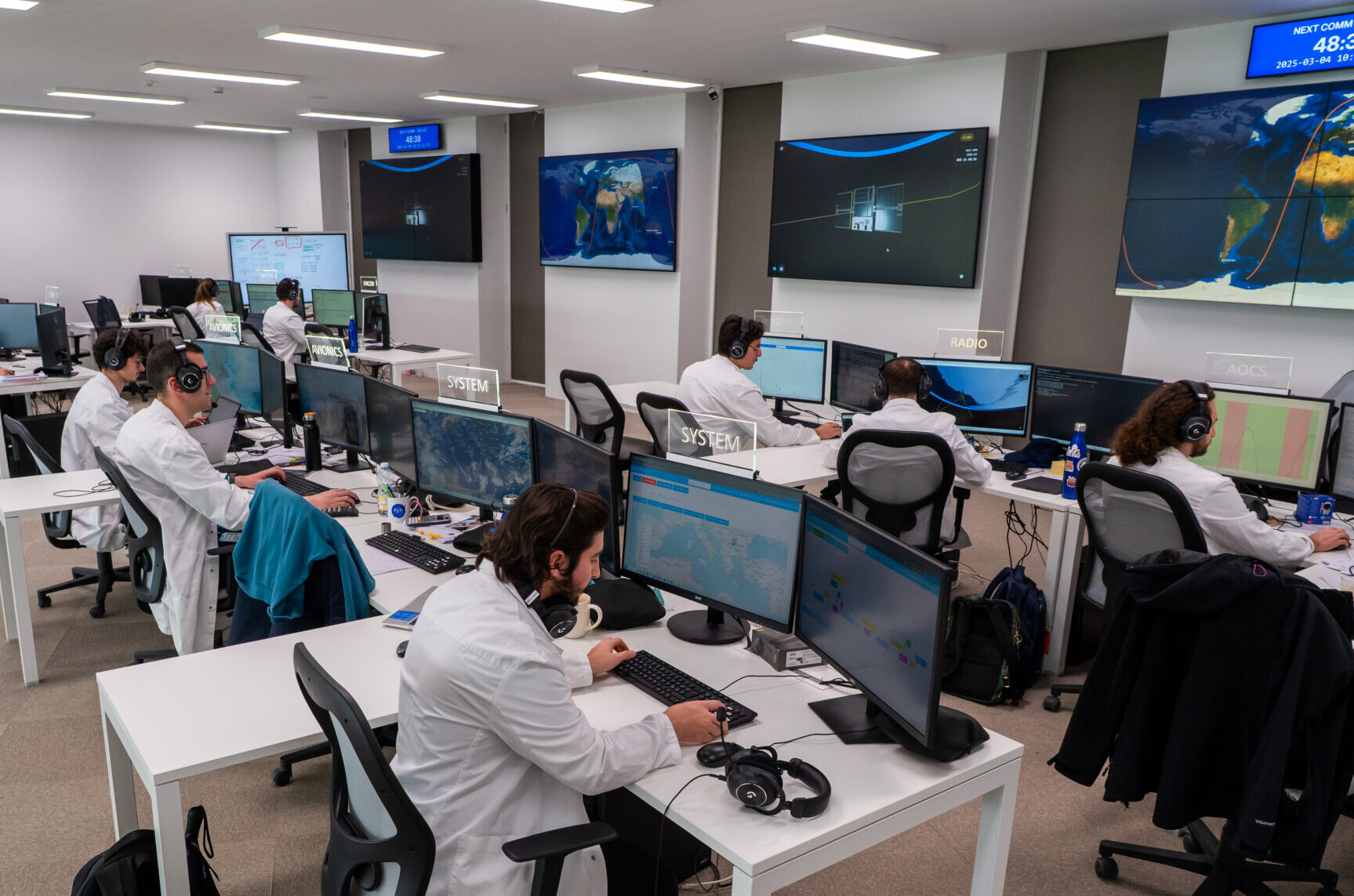
Underpinning every mission is the ground segment. The large antennas and mission control rooms are familiar to all of us, but before these come into play, a team of specialist software engineers will have been working for many months or years to prepare the software that will eventually be used by the mission operations team to ‘drive’ the satellite. This includes planning the activities, sending commands and analysing the satellite’s responses, enabling it to fulfil the mission’s aims and sometimes even helping to rescue a mission when something goes wrong.
Early engagement for flexible, robust and mission-ready systems
Teodoro Bonariol, Flight Operations Engineer at Argotec, which designs, manufactures and operates small satellites globally, says: “Our involvement as ground software engineers can begin months or even years before launch, sometimes as early as the mission proposal phase. At this stage, we help define the high-level architecture for ground tools and networks, ensuring that the future system will be flexible, robust and mission ready.”
“This early engagement is crucial: it allows us to shape solutions that are tailored to the mission’s unique operational needs right from the early design phases.”
“As the mission moves into design and development, we develop, test and validate the tools that will monitor, control and support mission operations,” continues Teodoro Bonariol.
“Our responsibility doesn’t end with the software delivery. Once the system is operational, we often become ground controllers ourselves, ensuring real-time software performance, reacting to anomalies, coordinating with external entities and maintaining the infrastructure that keeps the mission running smoothly.”
Ground segment software for satellite operations is not ‘plug and play’ because each mission or constellation is different. “It needs to be adapted to the mission and the satellite, so the engineers will work in tandem with the mission development team to understand the needs and the requirements for the ground segment. This includes aspects such as which onboard software will be employed and which standards will be used on the satellite,” explains Pablo Beltrami, Programme Manager and Ground Segment Competence Lead at Starion.
“Given that the ground segment software needs to be able to communicate with the onboard software, it’s typical that one or other will need to be adapted.”
Constellations and automation
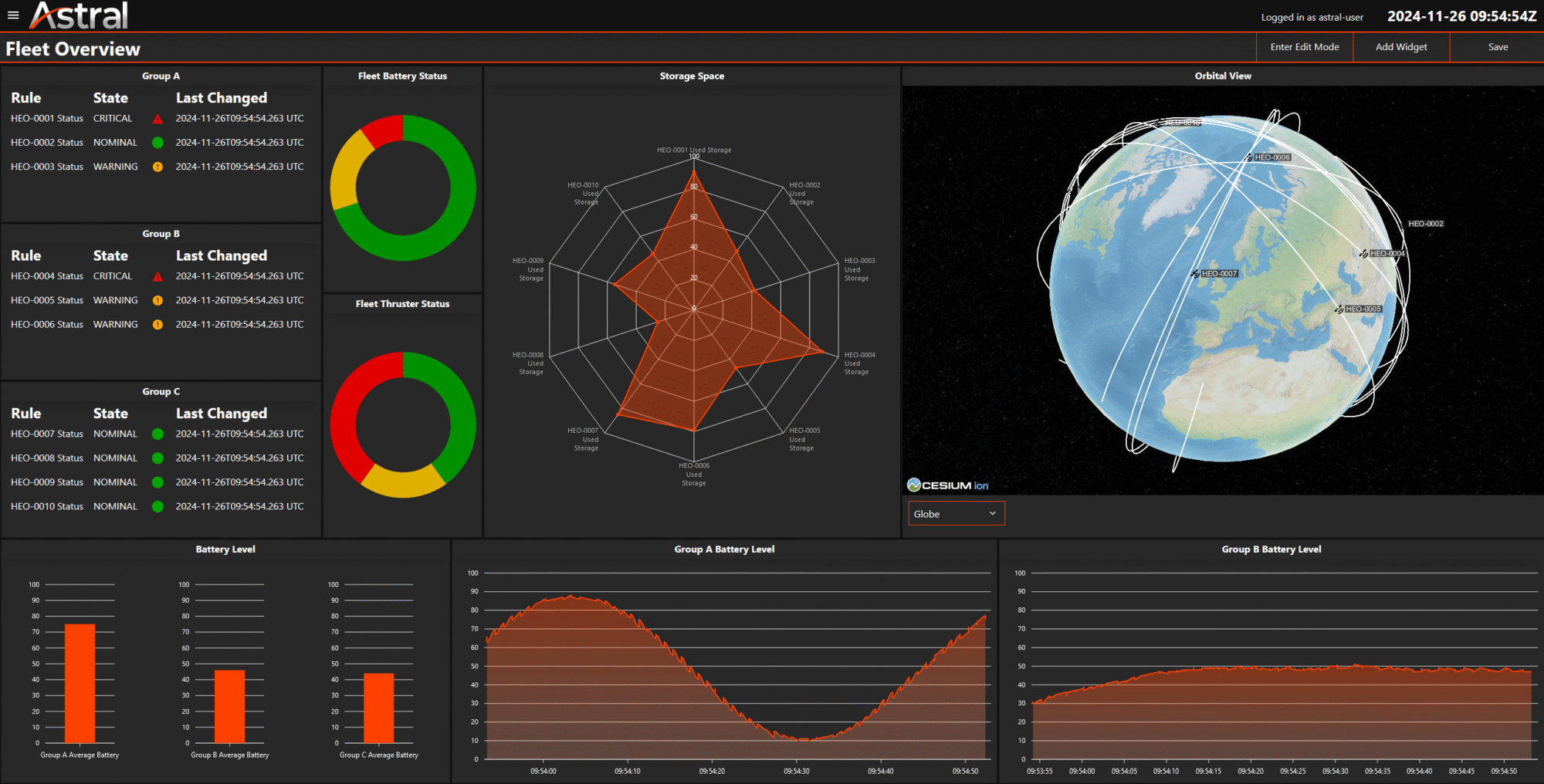
The growth of satellite constellations adds another dimension, as does the drive towards increased automation. In terms of ground segment software, each mission may have its own instance. “But when you are operating many satellites at the same time, you don’t want to have to manually run the procedures for each one individually,” continues Pablo Beltrami. “Automation is key and modern control systems are designed specifically to work with constellations, simplifying the operators’ tasks.”
End-to-end automation means that procedures can be prepared in advance, planned and commands sent automatically without the need for manual intervention during nominal operations.
“When dealing with satellite constellations, the operational complexity increases significantly,” explains Teodoro Bonariol from Argotec, whose Hawk for Earth Observation (HEO) constellation is using Starion’s Astral ground segment solution as part of its flight operations system.
“Supporting multiple spacecraft simultaneously requires robust, flexible and scalable tools. That’s why the selection and design of the ground segment software is a central focus from the very early phases of mission planning, continuing through development and testing. Our software must be able to adapt quickly to evolving needs, handle large volumes of data and support parallel operations across multiple satellites.
“Software specifically designed for constellations provides major advantages. It enables automation, efficient resource allocation and streamlined operations at scale. Most importantly, it allows us to manage multiple spacecraft with the same level of confidence and responsiveness as a single satellite – ensuring mission success, reducing operational overhead and increasing overall reliability.”
Continued support and future planning
Even when the ground segment software is handed over to the mission operations team months before launch for preparing the mission and training, the software engineers remain involved to support and maintain it.
Teodoro Bonariol says: “Our work continues for the entire duration of the mission – this can mean many years of commitment, long after the initial excitement of launch. And even as we support current operations, we are already thinking ahead, creating new solutions for future missions.”
Find out more
This is an extract from the latest issue of OpenSpace magazine. Subscribe to read other in-depth articles on space weather and civil security from space, plus an interview with the Director of the Spanish Space Agency.
Main image © ESA


