
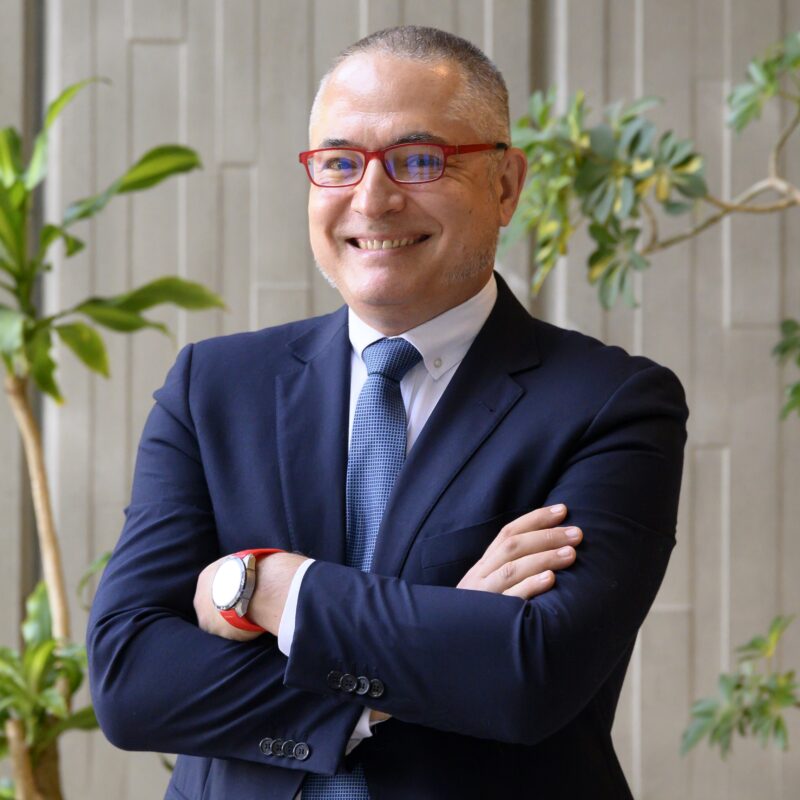
 Spain joined the European space effort at the beginning of the space era, around 1957, when the first man-made satellite, Sputnik, was placed in orbit. Since then, much has changed, particularly with the creation of a national space agency in 2023. In this extract from an interview in the latest issue of OpenSpace magazine, Juan Carlos Cortés Pulido, Director of the Agencia Espacial Española (AEE – the Spanish Space Agency) describes what the newly-formed agency has planned for Spain’s future space business.
Read the full article about the Spanish Space Sector and other space and cybersecurity articles in the latest issue of OpenSpace magazine.
AEE was inaugurated in Seville in 2023. The AEE has a dual mission: to coordinate national space activities and Spanish participation in international programmes. The Agency is establishing collaborations between all the ministerial departments with competences in the field of space.
What are the main objectives of AEE?
The primary mission of AEE is to coordinate and integrate all space-related activities across Spain. Before its establishment, 17 different ministries were involved in the space sector, with overlapping responsibilities ranging from policy and management to industry and user engagement. This fragmentation made it necessary to create a unified structure. Today, the AEE leads national efforts in space industrial and scientific policy, bringing together industry, researchers, scientists, technology centres, academia and end-users under a comprehensive, integrated framework.
The founding of the AEE has driven a new era for Spain’s space sector, enabling us to maximise the return on institutional investments in space.
In addition to programmatic divisions focused on science, industry and user engagement, the Agency also includes a dedicated Security Directorate, headed by an Air Force General, and a unique Office for Space and Society. This outreach division is tasked with raising public awareness of the role space plays in daily life. For instance, the average person relies on more than 100 satellites each day – demonstrating just how critical space technologies are to modern society.
Overall, the Agency is responsible for 29 areas of expertise and 15 clearly defined functions, all united by a single overarching goal: to enhance the wellbeing of citizens through space. Every initiative we undertake is driven by this purpose. The AEE also holds three strategic mandates: to develop a national Spanish space policy; to design and implement a long-term space strategy; and to draft a comprehensive space law. To date, we have launched over €580 million in programmes spanning a range of technologies and applications, and we have already surpassed 100% of our initial staffing goals.
How does AEE work with other European space agencies?
Cooperation is in our DNA. The AEE was founded by consolidating responsibilities, staff and budgets from various ministries, making cooperation an intrinsic part of our identity. Collaboration remains essential to achieving our strategic priorities. For this reason, we have created a dedicated Directorate for International Relations.
Globally, we’re observing a shift in space cooperation from multilateral frameworks to more multipolar dynamics. Since the invasion of Ukraine, this trend has become even more evident, with the focus of multipolar cooperation largely centred around the USA and China. In response, we are operating along two strategic axes. First, we are strengthening our partnerships with key European institutions such as ESA, the European Union Agency for the Space Programme (EUSPA) and EUMETSAT through the Agencia Estatal de Meteorología (AEMET), a state agency of the Government of Spain responsible for providing weather forecasts. Secondly, we are expanding our bilateral initiatives. Recently, we’ve signed new agreements with countries including Italy, Colombia, Turkey, Greece and Mexico, and we plan to continue pursuing such partnerships.
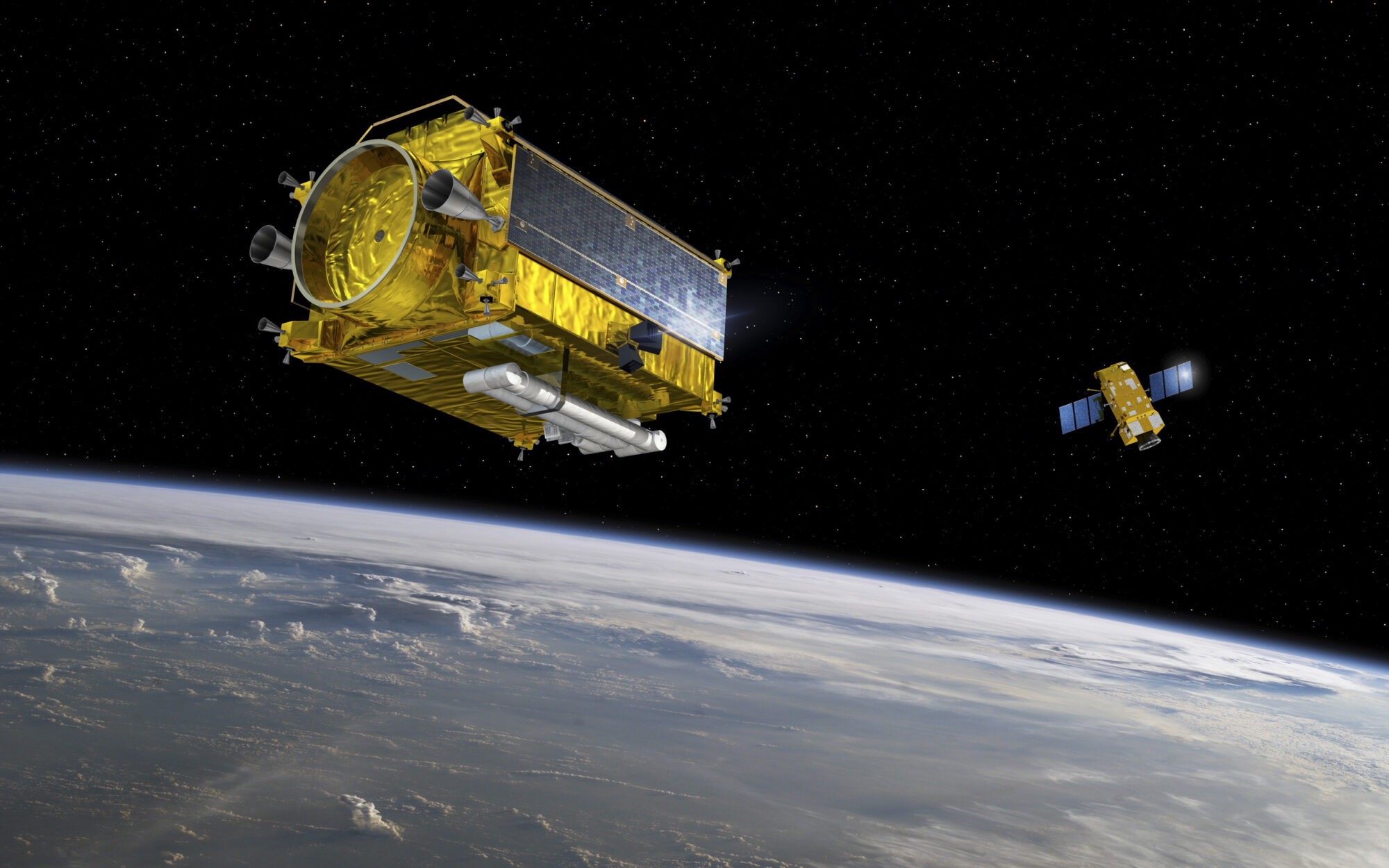
A notable example of bilateral cooperation is the Atlantic Constellation, a joint initiative with Portugal. This constellation currently includes eight satellites from each country, with the concept of an open constellation that enables shared data to reduce revisit times. It represents a significant step forward and we aim to continue strengthening similar collaborative efforts.
Our long-term goal is to establish a national satellite constellation providing different services and applications aimed at reducing revisit times. However, across all our efforts, cooperation and collaboration remain at the heart of what we do.
What are Spain’s priorities for the ESA Ministerial meeting in November?
It is important to note that the AEE is a management agency. We are more than 100 people developing the conditions to make the Spanish space sector grow. The execution of our programmes is done through industry, by scientists and by technology centres. We manage the programmes and sometimes we rely on ESA to execute some of our national programmes through third-party agreements; this is important for us.
We are advancing in the definition and consolidation of our priorities, and we want to a launch powerful technology programme dealing with critical technologies such as quantum key distribution and artificial intelligence.
Other important areas for us include space transportation and the domain of small launchers. We are also focused on applications; for instance, we are interested in EO programmes and we are the leaders in low Earth orbit PNT, an initiative being led by a Spanish company. We want to launch an Atlantic Constellation Plus programme that will complement the Atlantic Constellation satellites – two EO satellites, each with a high resolution infrared optical system. We aim to build on this programme in years to come with Portugal.
Other key priorities for us are telecoms and space situational awareness (SSA). We are interested in launching secure telecoms initiatives, reinforcing intersatellite communications and laser communications. And we want to be the first country to launch an active space debris removal to make a testbed for the re-entry of space debris. We are also working with programmes looking at space sustainability. The more satellites that are launched, the more vulnerable space becomes. The situation with space weather and solar storms has been very prominent in recent years and we want to launch a space weather operational system to reinforce our SSA programme and space sustainability.
What inspired you to lead AEE? And what legacy would you like to leave behind?
For me, I am honoured to be the first Director of the Agency. In this role, my main challenge is to fulfil the expectations of the space sector. We are a mature sector with many programmes and we are the leader of many initiatives. We also have a responsibility to capitalise on all the Spanish experience in space from the past 60 years to reinforce and develop the sector.
I have a mandate of 5 years plus 2, and my goal in that time is to significantly strengthen the Spanish space sector: doubling or even tripling its turnover. I want to position us to play a leading role in international initiatives and, where appropriate, to lead major global space programmes. The AEE is not just shaping Spain’s future in space but also ensuring that space delivers tangible benefits for every citizen. We are putting the boundary conditions for a smooth transition from current space activities to future commercial markets.
I often think of my 16-year-old son and what the space sector means for his generation. It’s essential that the next generation understands the importance of space activities and the vast potential they hold. Space innovation is driven by people. That’s why we must ensure that everyone is aware of the opportunities the space sector can offer, especially young people. Inspiring them today is how we build the future of space.
Find out more
This is an extract from the latest issue of OpenSpace magazine. Subscribe to read the full version and more, including articles on digital twins, space weather, civil security from space and the unsung heroes of space missions.