
Detecting asteroids and assessing whether they present a risk to us on Earth rarely makes the headlines, but it is an essential part of global planetary defence activities. To mark International Asteroid Day on 30 June 2026, we highlight two of the ways Starion’s experts are contributing to this endeavour.
Ten years ago, the United Nations designated 30 June as International Asteroid Day as a way of highlighting the hazards presented by potential asteroid impacts. The date commemorates the anniversary of the Tunguska impact over Siberia on 30 June 1908, which is the largest impact event in recorded history.
Today, specialists around the world work together to detect asteroids and calculate whether there is any risk that they will present a danger to humans, and when. They include several experts from Starion, who work at the European Space Agency’s (ESA’s) Near-Earth Object Coordination Centre (NEOCC), part of ESA’s Planetary Defence Office within the Space Safety Programme.
Any coverage of asteroids typically focuses on impacts with Earth. But given our reliance on space-based data and services, these are not the only concern….
Why does an asteroid impact with the Moon matter to us on Earth?
Eighteen months ago, asteroid 2024 YR4 made the headlines when experts, including the Starion team, calculated there was a chance it could hit Earth in 2032. The impact risk was eventually ruled out but there remained a possibility that the asteroid could crash into the Moon.
The Moon is covered in craters caused by the impacts of asteroids and meteoroids. Such impacts may not appear to be anything to worry about. However, if a large asteroid were to hit the Moon, it could result in a lot of ejected material, posing a threat to orbiting assets.
The estimated size of asteroid 2024 YR4 is approximately 60 metres, meaning it could create a crater with a diameter of around 1 kilometre. Not only would the resulting debris present a risk to satellites, it’s possible that in 2032 humans may have a presence in cis-lunar space – the region of space extending from space outward to and including the Moon – further complicating the scenario. This made it important to continue evaluating its trajectory.
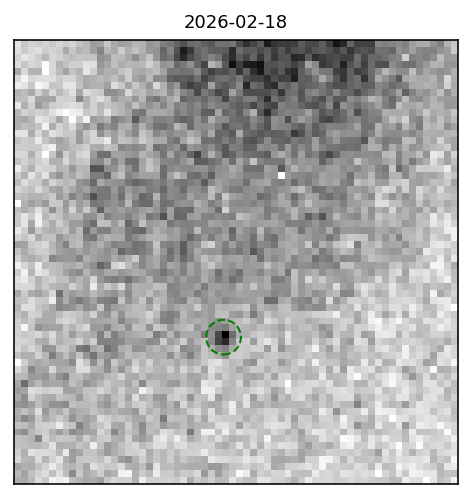
Earlier this year, the NEOCC team received additional images of the asteroid. Starion’s Marco Micheli, Astronomer / NEO Observer working at the NEOCC, was the main person responsible for analysing them to extract the precise measurement of the asteroid’s position that then led to the conclusive exclusion of any future lunar impact.
“This task illustrates the essential nature of my work, and that of my Starion colleagues and the wider international community. The skill lies in extracting and analysing the data, which is the part of the project I was involved in. We’ve been analysing this asteroid for a long time, so although we now know it presents no impact risk to the Earth or the Moon, I’m looking forward to seeing it when it comes close to us in 2032 – and also in 2028 when we’ll be able to observe it again!”
How is Starion supporting future observations of near-Earth objects?
Much of the work done by Starion’s experts involves making and coordinating observations, and performing specialised calculations (and recalculations) to determine asteroid orbits and the probabilities of any impact. The more observational data, the better the results.
Among the projects currently underway to provide more data is ESA’s new Flyeye telescope. Flyeye is so named because its design was inspired by a fly’s eye, giving it a field of view 200 times the size of the full Moon seen from Earth, which is rare for a telescope of this size. This will be Europe’s first telescope dedicated to surveying imminently impacting asteroids.
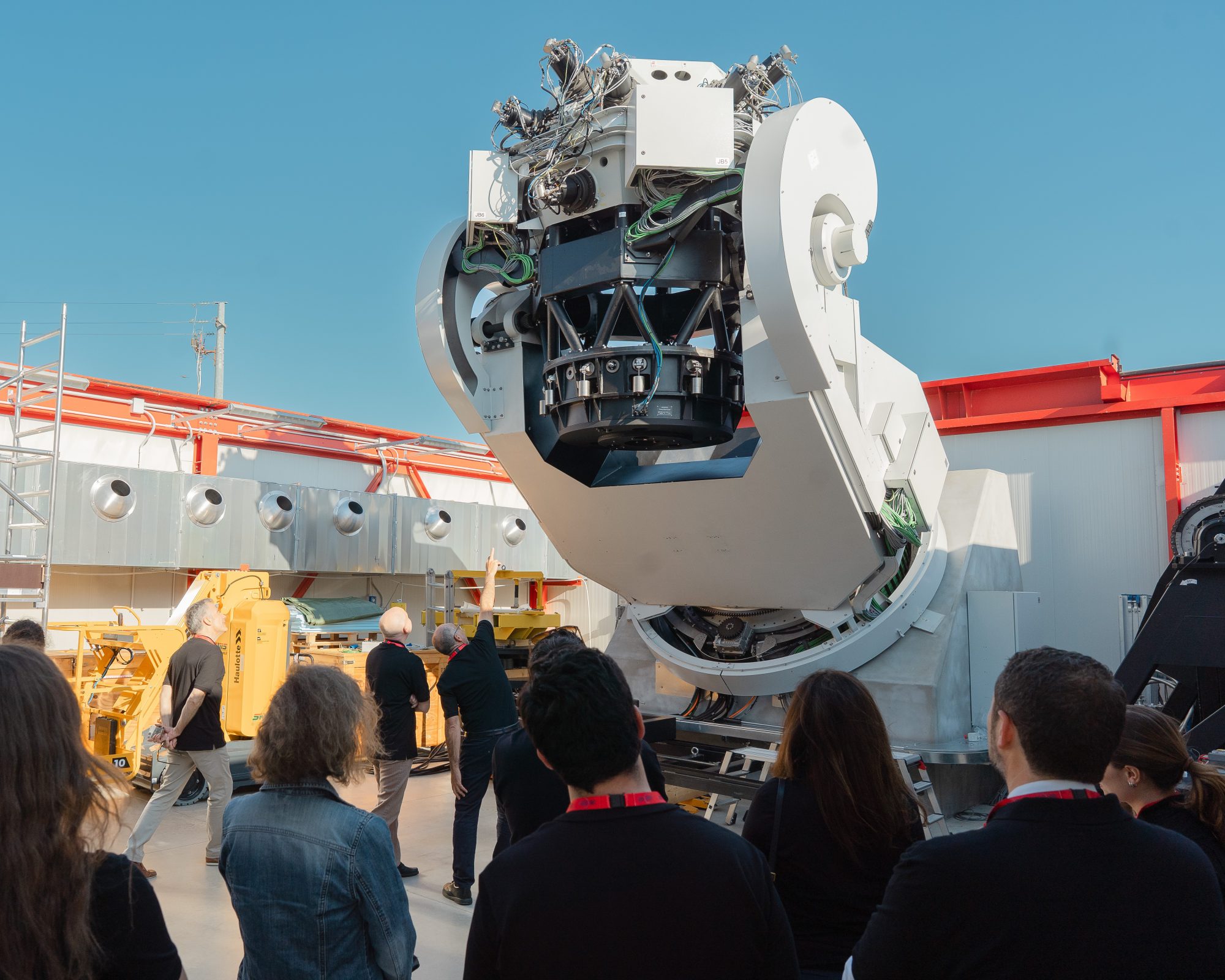
Flyeye’s first commissioning phase, involving end-to-end tests, was recently completed in Matera, Italy. The telescope is now being dismounted and prepared for shipping to its final location on Monte Mufara in Sicily. Up to three more Flyeye telescopes are planned for locations across the globe.
Dóra Föhring, another Starion Astronomer / NEO Observer, is responsible for the scientific commissioning of the Flyeye telescopes. This includes conducting site selection studies, evaluating and validating the scientific performance of the hardware and data processing pipeline, and contributing to the design of observation strategies and user interface software.
“The earlier we discover a potentially hazardous asteroid, the more lead time we have to accurately determine its orbit and physical properties. This allows us to assess any future risk and, if necessary, plan mitigation strategies. The Flyeye telescope network we are building will significantly strengthen the global capability to detect new near-Earth objects and provide the observations needed for reliable impact risk predictions.”
Further information
Find out more about the NEOCC at: neo.ssa.esa.int/


