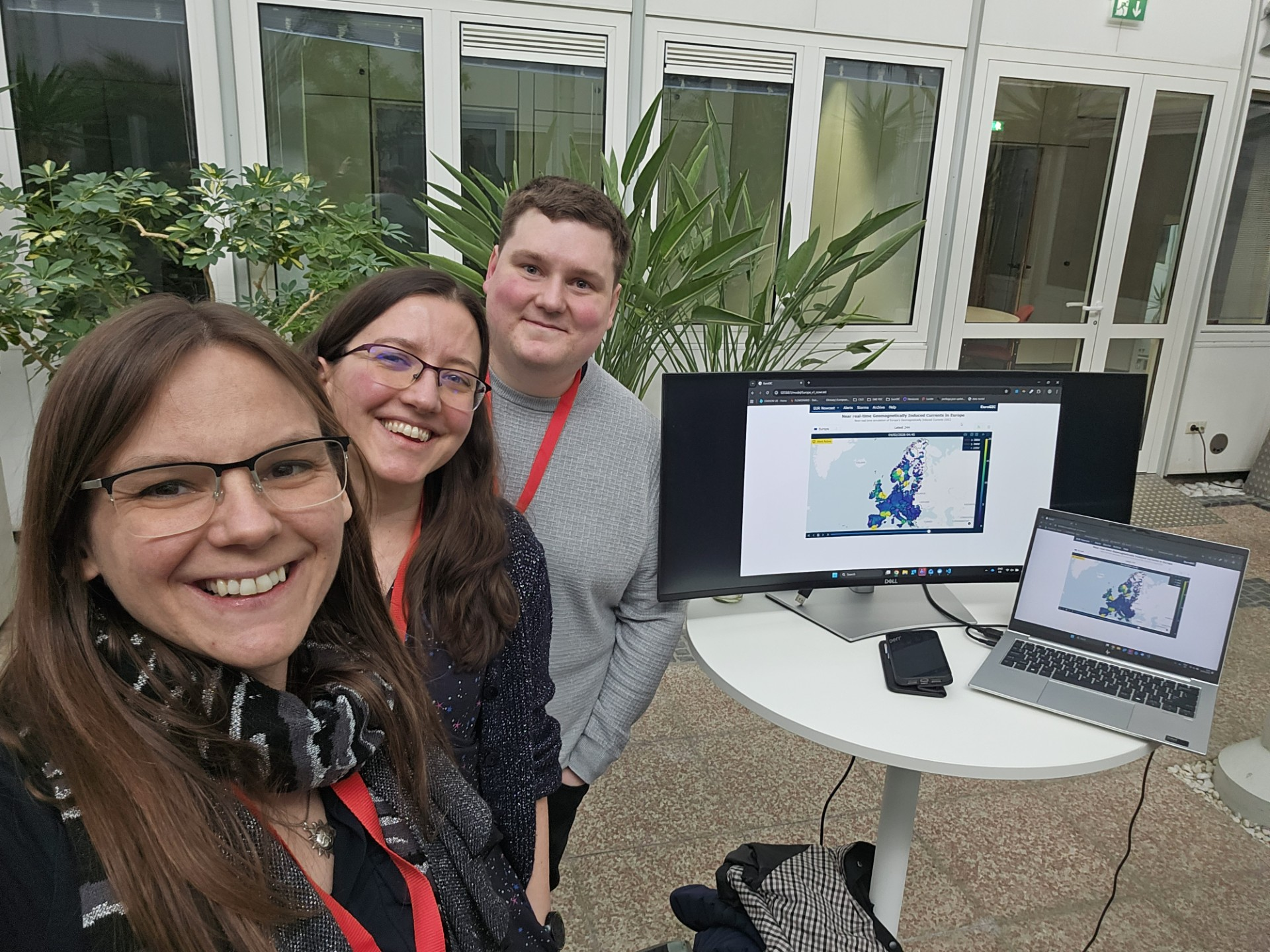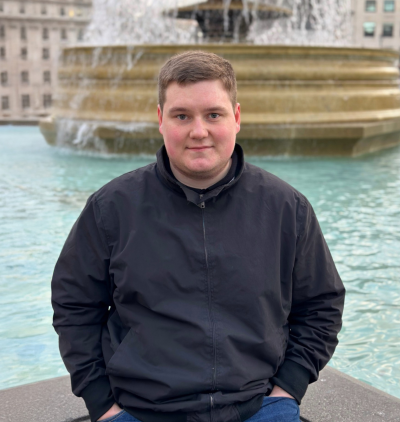
Lewys is a software engineer at Starion UK in the Bath office, working on space weather projects for the European Space Agency.
What’s your role?
I’m a software engineer working for Starion UK, based in the Bath office. I’ve been with the company for around one and a half years.
More specifically, I work on ground segment products and solutions, and am currently focusing on projects relating to space weather. Much of my work centres on the European Space Agency’s (ESA’s) new Space Weather Payload Data Centre (SWE PDC) project, in which we are enhancing European space weather data systems and ESA’s Space Weather Portal.
Alongside this, I work on the Space Weather Impact on European Power Grids (EuroGIC) project – an exciting new space weather product. I’ve had the privilege of leading the design and development of the EuroGIC platform.
What’s a typical day in your working life like?
The work is varied and genuinely exciting! So far, I’ve had the opportunity to travel to ESA’s European Space Operations Centre (ESOC) in Darmstadt, Germany, on two occasions. Once was to discuss the SWE PDC at a formal preliminary design review and the other was to co-present the SWE PDC data system enhancements and demo EuroGIC to the wider space weather network at a workshop.
What do you enjoy most about your job?
I really enjoy the combination of impact and technical challenge. Space weather can result in real-world consequences, from power grid disruptions to impacts on satellite operations, so knowing the software I work on contributes to the monitoring and understanding of these effects makes the work very meaningful.
The projects are also technically demanding, which keeps things interesting; whether I’m designing robust alert systems or developing a new product like EuroGIC from the ground up, there’s always a cool problem to solve.
What has been your most memorable career highlight?
Every trip to ESOC is extremely memorable for me. What made my first time truly special was that it coincided with the launch of the Biomass satellite, so I was lucky enough to see the main operations centre in action. It was also my first time travelling abroad and not something I ever expected in my career.
I am honoured the team trusts me and that my contributions are impactful enough to warrant these invitations. The inspirational atmosphere and pure talent at ESOC always cements the significance of the work and leaves you more motivated than ever.
Do you have any tips for people trying to get jobs in your area of expertise?
Collaboration, problem solving and a willingness to learn were the most important aptitudes for me.
Before Starion I had no space industry experience, so I found that picking things up quickly was key to bringing a fresh outside perspective, grounded in wider cross-industry standards and practices, to the needs of the scientific community.
How do you wind down?
Outside work, I love to cook new and exciting meals for myself and my partner, watch loads of movies, catch up with family and friends, and play video games (when I’m allowed!).