Case study: CDP4-COMET
CDP4-COMET is a model-based system engineering (MBSE) tool we developed specifically to support concurrent design projects involving multidisciplinary teams.
It is used by space agencies and both private and public sector organisations, most notably the European Space Agency (ESA) in its Concurrent Design Facility (CDF) at the European Space Research and Technology Centre (ESTEC) at Noordwijk in the Netherlands and at the ESA Academy Training and Learning Facility.

Timeline and milestones
- 2005 – The original tool in the CDP4-COMET family (CDP3) was released
- November 2017 – CDP4 v1 released
- March 2021 – CDP4-COMET announced
- April 2023 – CDP4-COMET Web App launched
- March 2025 – Latest upgrade to CDP4-COMET (v10.0.4)
- April 2026 – Announcement of start of development of SysML v2 version of CDP4-COMET
Stakeholders
CDP4-COMET is used by space agencies and both private and public sector organisations.
ESA officially adopted the tool for its Concurrent Design Facility (CDF) at ESTEC in 2022 following a transition from its previous in-house solution that began in summer 2021. It is also used at the ESA Academy Training and Learning Facility.
Objectives
The CDP4-COMET suite of tools is made up of various components. These include a desktop application, Excel integration, a web application, multiple command line applications, domain specific tool integrations and the application server that can function as a digital engineering hub.
These are designed for users who are either engineers using CDP4-COMET to model complex systems or administrators who are responsible for deploying the software for their user community. Any updates are designed to be relevant for both, improving overall performance, usability and security.
Innovation and implementation
CDP4-COMET is being continually developed to meet the evolving modelling needs of those involved in the early stage design of complex systems.
Using CDP4-COMET’s integrated design and modelling capabilities, teams can create a shared model to be used for the full life cycle of a product or system. Instead of relying on multiple documents that can get out of synch and introduce errors, this model-based approach provides a ‘single point of truth’.
Starion’s experts support and continue to develop two versions of CDP4-COMET: an open source Community Edition and an Enterprise Edition.
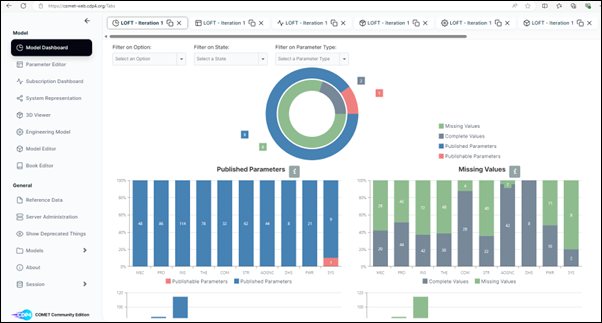
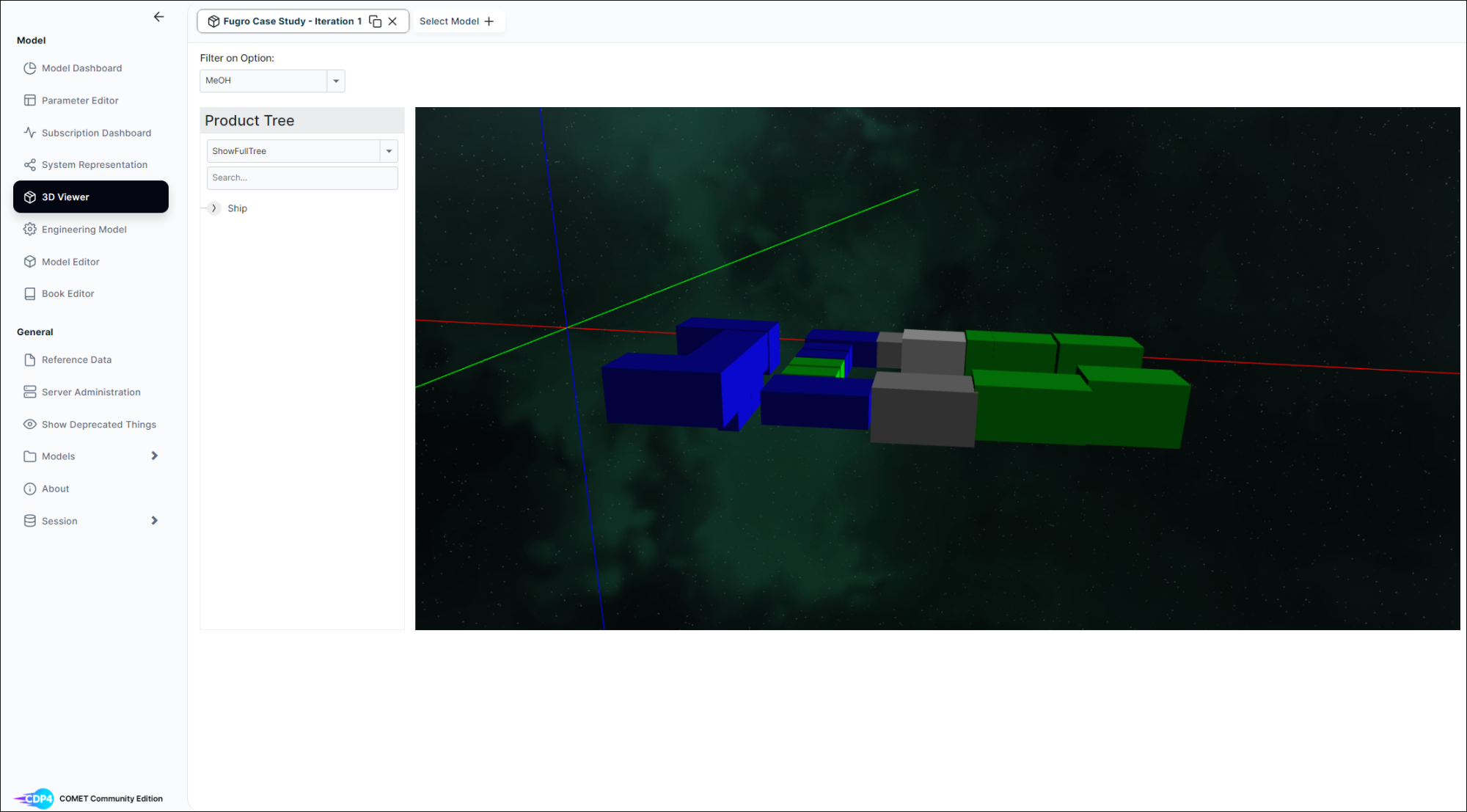
In June 2023, a Web App version was launched. Designed to deliver all the functionality of the desktop version, the Web App had a new look and feel, provided additional features including a 3D model viewer, and removed the need for every team member to have their own local version of CDP4-COMET. It includes nine ‘mini apps’ including a Model Dashboard and a 3D Viewer.
- The Model Dashboard provides statistics in visual format about the state of the model under development and shows how many of the elements have been used in each domain and how many parameters – such as mass, width, length and height – have missing values.
- In the 3D Viewer, clicking on any building block in the list highlights it in the 3D model and displays a list of its parameters and their values. Changes to these values can be submitted to the server, and the change is then reflected in the 3D model.
New releases since then have included significant updates to the CDP4-COMET Desktop Application, the CDP4-COMET Web Services and the Web Application.
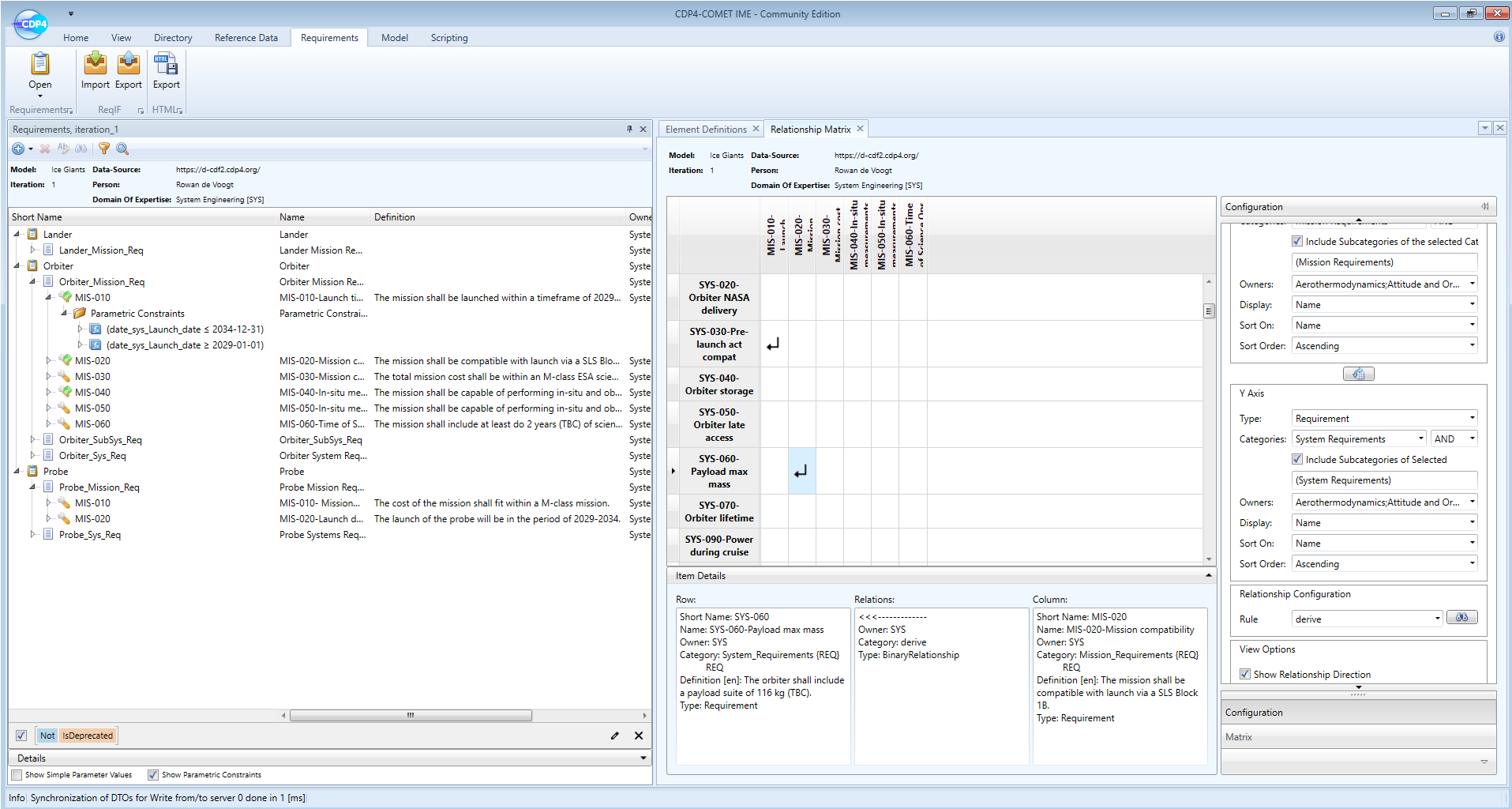
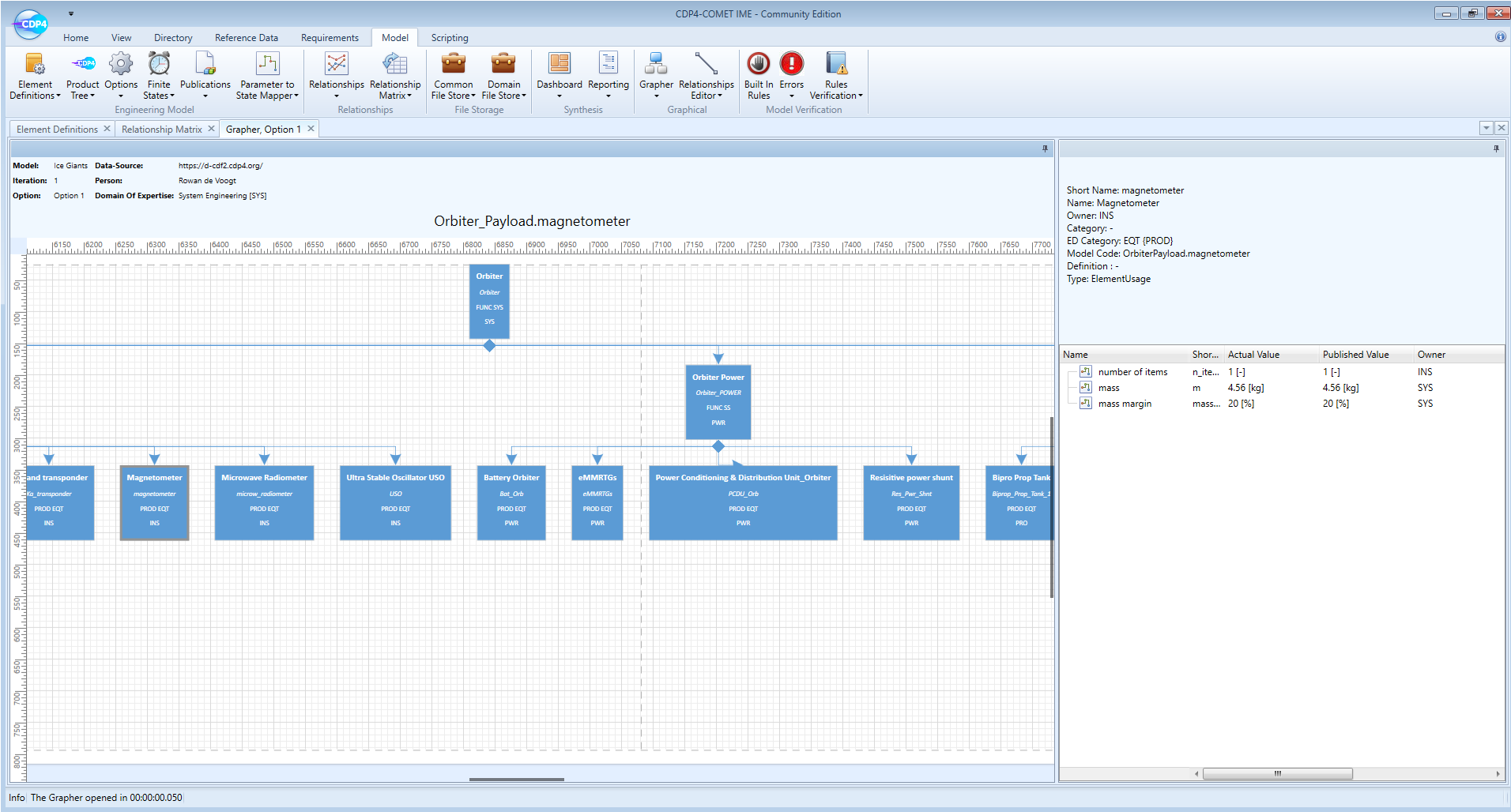
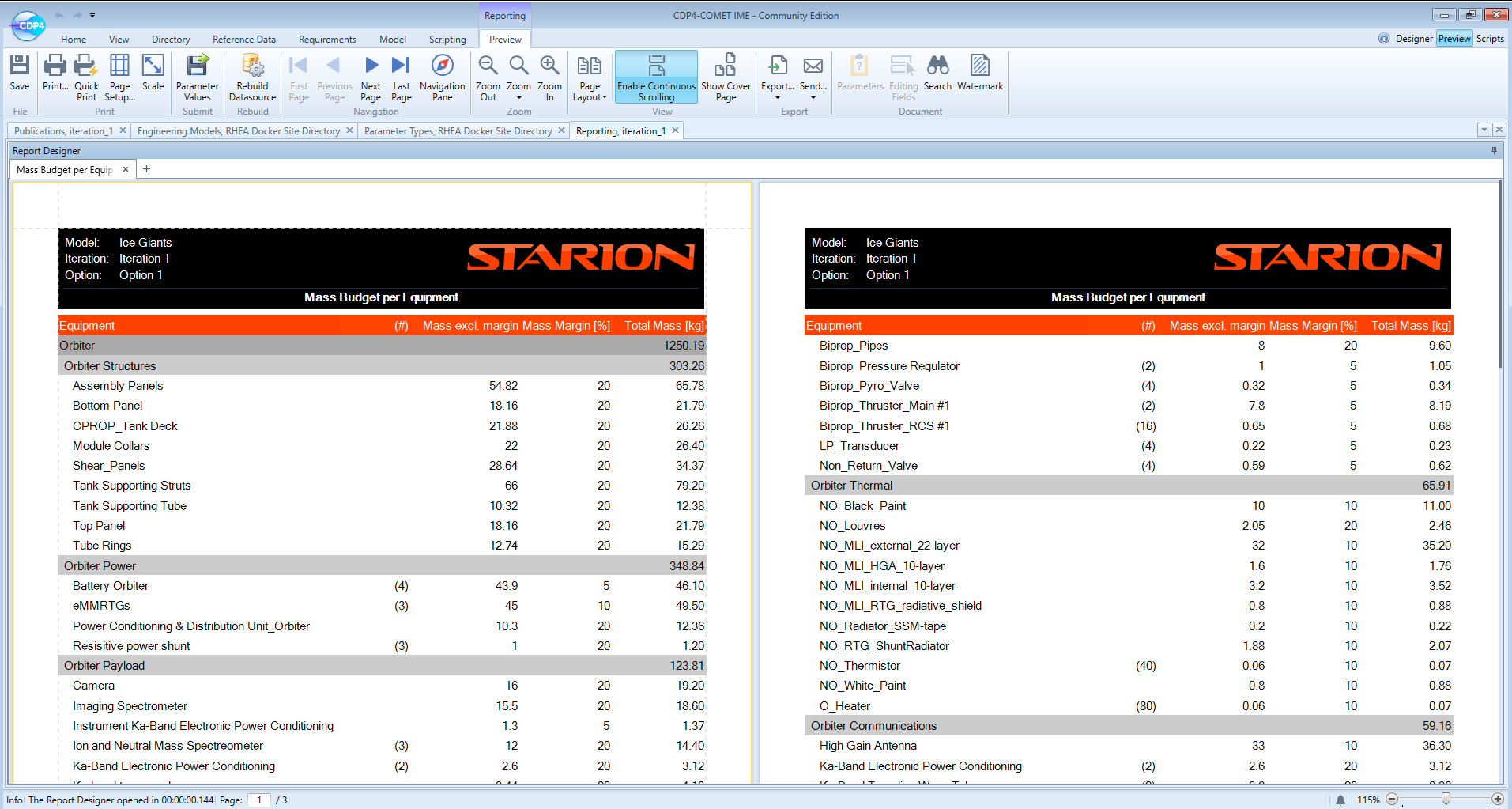
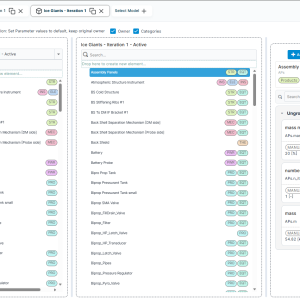
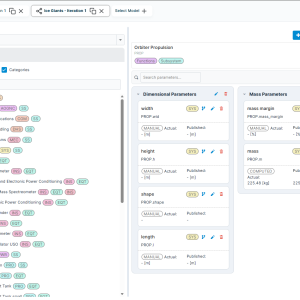
CDP4-COMET Desktop Application
CDP4-COMET Web Application
Results and impact
CDP4-COMET is used by space agencies, defence agencies, businesses and academic/educational organisations.
It has been used by ESA in its CDF at ESTEC since 2022, as described in ESA’s article describing the move to using CDP4-COMET – COMET upgrade for ESA’s mission design centre. At ESA, concurrent design using our CDP4-COMET software enables their experts to design future space missions in just 4 to 8 weeks.
“This new software provides a much better-performing and more contemporary user interface experience, and adds a new dimension to report generation, including mass and power budgets for the missions being designed.”
– Ilaria Roma, Head of the ESA Concurrent Design Facility
It is also used by other space agencies in Europe and elsewhere, including the Egyptian Space Agency.
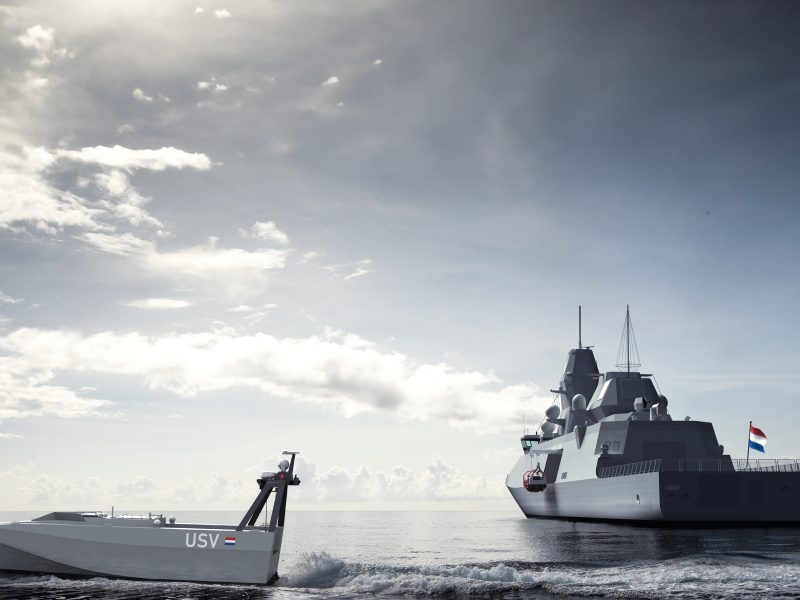
CDP4-COMET is used by the Dutch Ministry of Defence in its CDF, and in other space and defence projects, including the Low Observable Tactical Unmanned Air System (LOTUS) project. Most recently, CDP4-COMET is now being used to support the next design phase of an unmanned surface vessel (USV) for the Dutch MoD. Starion’s experts will lead the multidisciplinary concurrent design sessions, with the CDP4-COMET tool used to support the design process as well as verification and design reviews.
CDP4-COMET is also used in education settings to train future engineers. For example, it is being used at the École Polytechnique Fédérale de Lausanne (EPFL), a public research university in Switzerland, where students learn about the concurrent design methodology and apply it to the design of a space mission using Starion’s CDP4-COMET software. Similarly, Starion experts have been teaching concurrent design and collaborative MBSE using CDP4-COMET to support Dutch students in designing the small science satellite Netherlands Educational Small-sat for Exploring Binary-Linked Astrophysics – X-ray Observer, otherwise known as NEBULA-Xplorer.
What’s next?
Starion’s current modelling tool, CDP4-COMET, is based on the ECSS-E-TM-10-25 technical memorandum, which is a reference standard for exchanging model data that’s used in space system engineering and was developed by ESA and its industrial partners. SysML v2 is the latest evolution of the Systems Modeling Language (SysML), developed by the Object Management Group (OMG).
The evolution of CDP4-COMET to a SysML v2-compliant platform will enable seamless integration between early phase space mission activities and the later phases carried out at ESA’s European Space Operations Centre (ESOC), where work is underway to develop a SysML v2 implementation for its activities.
CDP4-COMET is also used in other sectors for early phase design of complex systems, including maritime and defence. Starion’s new tool will provide a straightforward migration path for all existing CDP4-COMET users, providing them with a significant leap forward in capabilities and standards alignment.
Like the existing CDP4-COMET platform, two versions of the new cloud-based, standards-compliant tool are being developed: an open-source version, providing easy, low barrier access for small companies and academic institutions, and an Enterprise Edition with additional enterprise-grade features and support for larger organisations. The development roadmap includes regular community engagement to attain feedback from early adopters.
Starion’s new SysML v2-based tool will enable European space actors to collaborate more effectively, reduce iteration cycles and improve design traceability, from early-phase studies to implementation and verification. By investing in open-source tooling, enterprise-grade infrastructure and a scalable training and certification programme, Starion is not only delivering software – we are supporting strategic European goals around digital sovereignty by providing a European-led platform built on open standards and deployed under European control.
Notes
This project is being realised with support from the Belgian Science Policy Office (BELSPO) through ESA’s General Support Technology Programme (GSTP).
Find out more:
- CDP4-COMET product page including detailed feature list plus links to the manual, Community Edition download and Web App demo
- Concurrent design brochure
- Starion’s system engineering training courses, including CDP4-COMET Fundamentals
- Starion’s concurrent design and MBSE service and solutions
- Contact us for more information